
28-day Japan & South Korea discovery
28-night Asia cruise from Tokyo, Japan to Hong Kong aboard Noordam.
Calling at Shimizu, Osaka, Kochi, Fukuoka, Yeosu, Maizuru, Niigata, Hakodate, Aomori, Miyako, Hiroshima, Nagasaki, Busan, Shanghai and Hong Kong, with 5 days at sea. 16 ports of call across Japan, South Korea and China.
Noordam is a Holland America Line Vista-class ship that entered service in 2006, carrying around 1,970 guests. A regular in Australian and New Zealand waters, she offers the line’s classic mid-size experience with a notable art collection, the Greenhouse Spa and Pinnacle Grill dining.
Stateroom categories range from Interior to Neptune Suite.
- 10 Oct 2027 – 07 Nov 2027
from $7,499 pp twin share *
Additional Pricing Information
- Interior from $7,499 pp twin share
- Ocean View from $7,939 pp twin share
- Verandah from $11,059 pp twin share
- Neptune Suite from $20,229 pp twin share
* Prices and category availability are subject to change without notice.
Itinerary
Day 1 – Tokyo, Japan
Departs 07:00 pm.
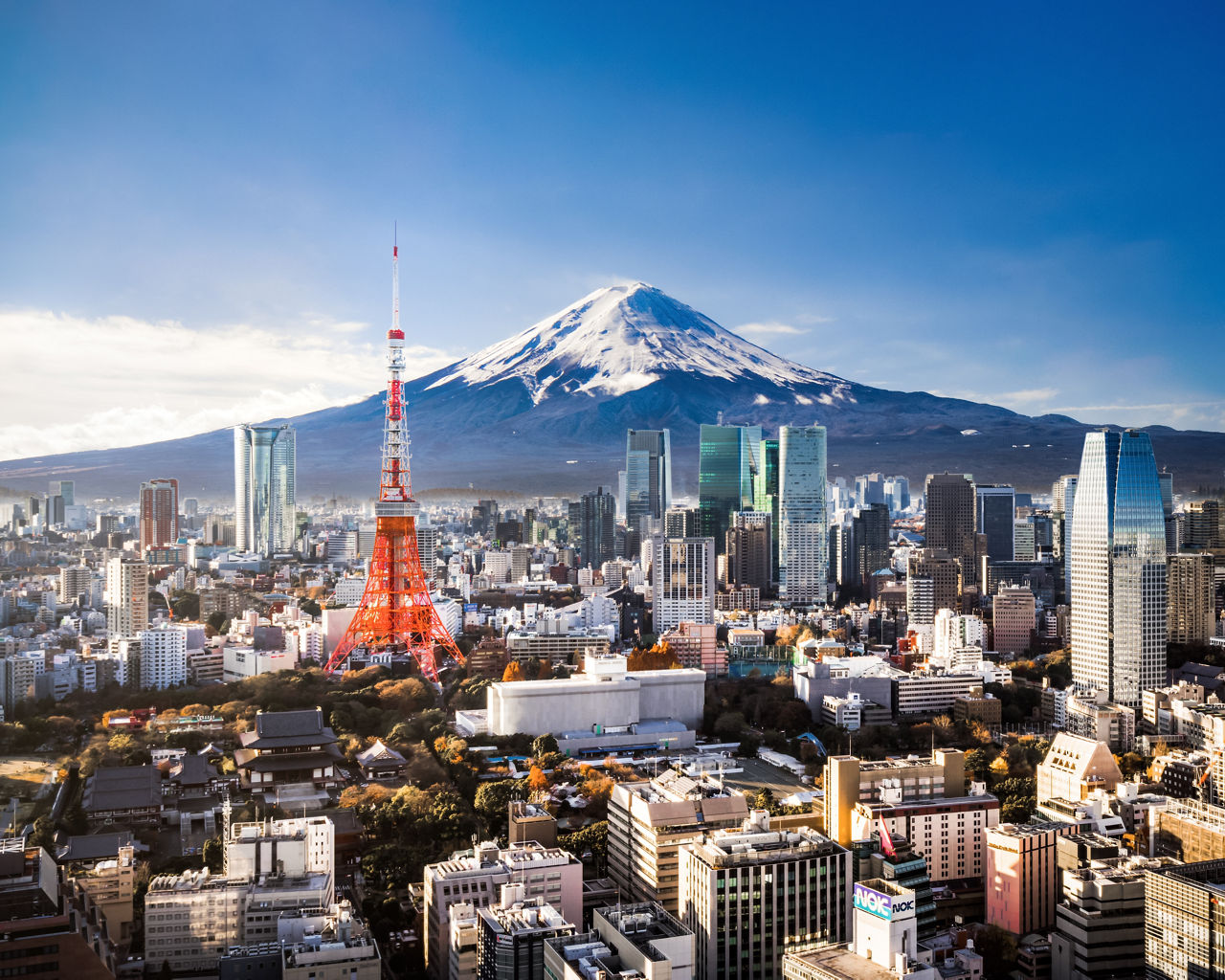
Contemporary Tokyo may be the most astonishing city on earth. It’s a paradoxical mix of ancient tradition and postmodern culture. The Ginza, an international shopping mecca, stands near the serene grounds of the Imperial Palace, and the hyper-speed of 21st century consumerism is mysteriously reconciled with the elegance and serenity of traditional culture. Tokyo provides the traveler with a dizzying experience.
Day 2 – Shimizu, Japan
Arrives 07:00 am, departs 03:00 pm.
Day 3 – Osaka (for Kyoto), Japan
Arrives 10:00 am, departs 09:00 pm.
For centuries, Osaka was Japan’s cultural and commercial gateway to Asia – the point of entry both for trade goods and, most importantly, cultural influences that shaped Japanese society. From tea to Zen, from art to science and philosophy, Osaka was Japan’s contact with the great East Asian cultures that flourished in China and Korea. The city reached its zenith in the late 16th century, when the great feudal lord Toyotomi Hideyoshi made Osaka his capital. Toyotomi was master of Japan, and an immense administrative and commercial center rapidly developed around Osaka Castle. After Toyotomi’s death, the nation’s seat of power shifted from Osaka to a sleepy little fishing village called Edo – modern Tokyo. While overshadowed by Tokyo, Osaka remains Japan’s second largest city and a vital commercial center.Modern Osaka is home to monuments from Japan’s past including Toyotomi’s immense castle and the Sumiyoshi Shrine. The city is also your gateway to Kyoto, Japan’s ancient imperial capital and the nation’s cultural and spiritual center.
Day 4 – Kochi, Japan
Arrives 10:00 am, departs 09:00 pm.
Kochi sits on the broad alluvial plain facing Urado Bay. This city in Shikoku takes its name from the great feudal castle that sits at its very heart. Completed in 1611, Kochi Castle was the seat of Yamauchi Kazutoyo, a noted warrior who supported Tokugawa Ieyasu in his successful quest to become Shogun. Tosa Province and Kochi Castle were Yamauchi’s reward for faithful service. There is an historical irony here: 250 years later, a Kochi native son – a former low-ranked samurai and now ronin named Sakamoto Ryoma – played a pivotal role in bringing the Tokugawa Shogunate to an end and restoring the Emperor of Japan to political prominence. The prize once awarded for faithful service had become a hotbed of support for the Meiji Restoration.Kochi is one of the wettest places in Japan – and a frequent target for cyclonic storms or typhoons. Southeast of the city, warm oceans currents washing against the Aki Mountains create a subtropical landscape of hibiscus, palm and ficus at Muroto-Anan Quasi-National Park.
Day 5 – Scenic Cruising Kanmon Strait
Day 6 – Fukuoka (Hakata), Japan
Arrives 08:00 am, departs 05:00 pm.
Day 7 – Yeosu, South Korea
Arrives 08:00 am, departs 05:00 pm.
Day 8 – At Sea
Day 9 – Maizuru, Japan
Arrives 07:00 am, departs 04:00 pm.
Day 10 – Niigata, Japan
Arrives 08:00 am, departs 05:00 pm.
Traditionally famous for rice making and sake production, Niigata is the place for gourmet aficionados. It is also well known for the seafood caught from the Sea of Japan. With this variety of the commodity produced locally, Niigata developed from the wealth gained through shipping and trade by Kitamae-bune, which were cargo ships operated along the Sea of Japan between Hokkaido and Osaka from mid-18th century to the end of the 19th century. To the south of Niigata is the Tsubame-Sanjo area famous today for metalworking. This derives from the production of Japanese nails used for Japanese traditional architecture. To discover Japanese craftsmanship, you will have the chance to visit the Suwada Open Factory. Also nearby is the religious center of Niigata in Yahiko. The Yahiko Shrine has gathered the devotion of the locals for more than a millennium.
Day 11 – Hakodate, Japan
Arrives 10:00 am, departs 11:00 pm.
It took Commodore Perry and American gunboat diplomacy to open Japan to the outside world after two centuries of self-imposed isolation. In 1859, the port of Hakodate became the first Japanese city fully opened to Westerners under the Treaty of Amity and Commerce. Foreigners soon flocked to Hakodate, and today visitors wandering the cobblestone streets of the city’s Motomachi District can view their Western-style frame houses. Hakodate, once a fishing port famed for its high quality fish and shellfish, quickly became Hokkaido’s largest city and one of Japan’s most important ports. The Great Hakodate Fire of 1934 dealt the city a near fatal blow – a blow from which Hakodate was slow to recover. Today the city is Hokkaido’s third largest – surpassed by Sapporo and Asahikawa – but retains its foremost position as the finest Japanese producer of sushi’s raw product: the high quality seafood caught in Hokkaido’s cold waters.It may not compare to Tokyo’s Tsukiji’s Fish Market, but at Hakodate’s four-block-long Morning Market, vendors offer a stunning array of fresh fish and shellfish prized for sushi including salmon roe, sea urchin, scallops and crab. Restaurants and food stands prepare a wide arrange of dishes including domburi topped with fresh seafood.
Day 12 – Aomori, Japan
Arrives 08:00 am, departs 07:00 pm.
The capital of the Aomori Prefecture in northern Japan, Aomori derives much of its beauty from the apple orchards and cherry blossoms that encompass its landscape and the snow-covered Hakkoda Mountains that look on from a distance. Throughout its history, the city has been stricken with misfortune time and time again – in 1910, a fire destroyed Aomori, and during World War II, the city was left in ruins following an air raid – yet it always prevails.Aomori is perhaps best known for its renowned Nebuta Festival, an elaborate yearly event in which participants illuminate giant paper representations of samurai warriors, animals, and popular cartoon characters while parading them through the streets.
Day 13 – Miyako, Japan
Arrives 08:00 am, departs 05:00 pm.
Day 14 – At Sea
Day 15 – Tokyo, Japan
Arrives 08:00 am, departs 07:00 pm.
Contemporary Tokyo may be the most astonishing city on earth. It’s a paradoxical mix of ancient tradition and postmodern culture. The Ginza, an international shopping mecca, stands near the serene grounds of the Imperial Palace, and the hyper-speed of 21st century consumerism is mysteriously reconciled with the elegance and serenity of traditional culture. Tokyo provides the traveler with a dizzying experience.
Day 16 – Shimizu, Japan
Arrives 07:00 am, departs 04:00 pm.
Day 17 – Osaka (for Kyoto), Japan
Arrives 09:00 am, departs 08:00 pm.
For centuries, Osaka was Japan’s cultural and commercial gateway to Asia – the point of entry both for trade goods and, most importantly, cultural influences that shaped Japanese society. From tea to Zen, from art to science and philosophy, Osaka was Japan’s contact with the great East Asian cultures that flourished in China and Korea. The city reached its zenith in the late 16th century, when the great feudal lord Toyotomi Hideyoshi made Osaka his capital. Toyotomi was master of Japan, and an immense administrative and commercial center rapidly developed around Osaka Castle. After Toyotomi’s death, the nation’s seat of power shifted from Osaka to a sleepy little fishing village called Edo – modern Tokyo. While overshadowed by Tokyo, Osaka remains Japan’s second largest city and a vital commercial center.Modern Osaka is home to monuments from Japan’s past including Toyotomi’s immense castle and the Sumiyoshi Shrine. The city is also your gateway to Kyoto, Japan’s ancient imperial capital and the nation’s cultural and spiritual center.
Day 18 – Kochi, Japan
Arrives 08:00 am, departs 05:00 pm.
Kochi sits on the broad alluvial plain facing Urado Bay. This city in Shikoku takes its name from the great feudal castle that sits at its very heart. Completed in 1611, Kochi Castle was the seat of Yamauchi Kazutoyo, a noted warrior who supported Tokugawa Ieyasu in his successful quest to become Shogun. Tosa Province and Kochi Castle were Yamauchi’s reward for faithful service. There is an historical irony here: 250 years later, a Kochi native son – a former low-ranked samurai and now ronin named Sakamoto Ryoma – played a pivotal role in bringing the Tokugawa Shogunate to an end and restoring the Emperor of Japan to political prominence. The prize once awarded for faithful service had become a hotbed of support for the Meiji Restoration.Kochi is one of the wettest places in Japan – and a frequent target for cyclonic storms or typhoons. Southeast of the city, warm oceans currents washing against the Aki Mountains create a subtropical landscape of hibiscus, palm and ficus at Muroto-Anan Quasi-National Park.
Day 19 – Hiroshima, Japan
Arrives 07:00 am, departs 11:59 pm.
On August 6, 1945, human history was irrevocably altered when the American bomber Enola Gay dropped an atomic bomb on Hiroshima. The bomb was code-named “Little Boy,” but its detonation left half the city in ruins and aflame. Today, Hiroshima is a monument not only to the destructive forces harnessed by men but also to the indomitable will of the human spirit to overcome tragedy. At the heart of the city lies Peace Memorial Park and the Atomic Bomb Dome. The gutted walls of the city’s old Industry Promotion Hall and the skeletal frame that supported its copper dome, vaporized in the blast, are instantly recognizable symbols of Hiroshima.Travelers to Hiroshima will discover a more serene note at nearby Miyajima Island. One of the top-three scenic spots of Japan, the island is home to ancient Itsukushima Shrine, a designated National Treasure.
Day 20 – Scenic Cruising Kanmon Strait
Day 21 – Fukuoka (Hakata), Japan
Arrives 07:00 am, departs 06:00 pm.
Day 22 – Nagasaki, Japan
Arrives 08:00 am, departs 06:00 pm.
For most travelers, Nagasaki is a symbol of the horror and the inhumanity of war. An estimated 75,000 people perished in 1945 when the city became the second target of a nuclear attack. Today, Nagasaki’s Peace Park and Atomic Bomb Museum draw visitors from around the world.But this beautiful city on Kyushu offers other sights. Often described as the San Francisco of Japan, the city occupies verdant hills surrounded by a deep-water bay. For three centuries, Nagasaki was Japan’s sole window on the world. The city is also celebrated as the setting for Puccini’s opera “Madame Butterfly.”
Day 23 – Busan, South Korea
Arrives 08:00 am, departs 06:00 pm.
The second largest city in South Korea, Busan is your gateway to a fascinating land whose culture is a unique amalgam of old and new. Modern high-rise towers dwarf ancient Buddhist temples. The city’s bustling business district offers a stark contrast to the serene grounds of Yongdusan Park. In short, Busan is a microcosm of South Korea, a nation whose startling economic success often obscures one of Asia’s most sophisticated and venerable cultures.Busan was the scene of bitter fighting during the Korean War. The United Nations Memorial Cemetery marks the final resting place for the troops from 16 nations who gave their lives during the conflict.
Day 24 – At Sea
Day 25 – Shanghai, China
Arrives 07:00 am.
Day 26 – Shanghai, China
Departs 11:00 pm.
Day 27 – At Sea
Day 28 – At Sea
Day 29 – Hong Kong
Arrives 06:30 am.
Skyscrapers form a glistening forest of steel and glass, junks and sampans ply the busy harbor waters, and the green, dragon-crested hills of Kowloon beckon. Welcome to Hong Kong, one of the world’s great travel destinations. Now a semi-autonomous region of China, Hong Kong – literally “Fragrant Harbor” – has lost none of its charm, excitement or exoticism. Modern skyscrapers and luxury hotels climb the slopes of Hong Kong Island. Narrow streets are crammed with noodle vendors, fortunetellers and bonesetters. The endless array of shops offer the visitor everything from hand-tailored suits and ancient porcelain to the latest consumer electronics. And everywhere more than seven million people are moving at a breathtaking pace in one of the world’s great monuments to capitalism, commerce and enterprise.The former Crown Colony has enough attractions to last a lifetime. To take in the entire spectacle, head to Victoria Peak for panoramic views. Enjoy lunch on one of the city’s floating restaurants. Walk down one of the crowded streets to take the city’s rapid pulse. And whether you think you are in the mood or not – shop. After all, you are in the duty-free capital of the world.
Highlights
- Cruise to 16 ports across Japan, South Korea and China
- Discover historic cities and cultural highlights
- Travel aboard the mid-size Holland America Line ship Noordam
28-night Asia cruise from Tokyo, Japan to Hong Kong aboard Noordam.
Calling at Shimizu, Osaka, Kochi, Fukuoka, Yeosu, Maizuru, Niigata, Hakodate, Aomori, Miyako, Hiroshima, Nagasaki, Busan, Shanghai and Hong Kong, with 5 days at sea. 16 ports of call across Japan, South Korea and China.
Noordam is a Holland America Line Vista-class ship that entered service in 2006, carrying around 1,970 guests. A regular in Australian and New Zealand waters, she offers the line’s classic mid-size experience with a notable art collection, the Greenhouse Spa and Pinnacle Grill dining.
Stateroom categories range from Interior to Neptune Suite.
Inclusions
- Dining in the main Dining Room and casual venues
- Live music venues and nightly entertainment
- Fitness centre and swimming pools
- Enrichment programme and port talks
FAQs
Noordam is a Holland America Line Vista-class ship that entered service in 2006, carrying around 1,970 guests. A regular in Australian and New Zealand waters, she offers the line’s classic mid-size experience with a notable art collection, the Greenhouse Spa and Pinnacle Grill dining.
Stateroom categories available on this sailing: Neptune Suite, Verandah, Ocean View and Interior.
How long is this journey?
This itinerary runs for 29 days and 28 nights.
When can I travel?
Departures are currently scheduled between 10 Oct 2027 and 07 Nov 2027, subject to live availability.
What is generally included?
Inclusions typically cover guided touring and selected experiences, with exact details listed in the itinerary.
What style of accommodation is used?
Accommodation is pre-arranged as part of the journey, with specific properties shown in the trip details.
Provided by: Holland America LineFine Print
Terms and conditions apply. Click here for more details.
Enquire Now
Speak with our travel experts and get your personalised quote.